
A rare disease patient should not have to choose between joining a clinical trial and getting on with daily life. Yet that is precisely the choice traditional, site-based research keeps asking of them. For rare disease research in particular, decentralized clinical trials have shifted from a nice-to-have to a design requirement.
This article explains what decentralized clinical trials are, why rare disease populations make them essential, what regulators now expect, and how to evaluate a home-visit trial partner.
Key takeaways
- Rare disease populations are small and spread across many countries, which makes site-based recruitment slow and retention fragile.
- Decentralized clinical trials (DCTs) bring trial activities to the patient instead of forcing repeated travel.
- Regulators have caught up: the FDA finalized its guidance on trials with decentralized elements in 2024, the EU published its recommendation paper in 2022, and ICH E6(R3) Annex 2 now sets out good clinical practice for these designs.
- The technology and logistics are largely solved. The remaining bottleneck is the The assumption that the patient should travel to the trial rather than the trial to the patient.
What is a decentralized clinical trial?
A decentralized clinical trial (DCT) is a study in which some or all trial-related activities take place away from the traditional research site. This can be at the participant’s home, at a local clinic, or through telehealth. Instead of requiring every visit to happen at a hospital, a DCT can use home visits by trained nurses, local laboratory testing, local healthcare providers, and digital health technologies to collect data remotely.
Most rare disease studies are not fully virtual. They are hybrid: a handful of activities still happen at a specialist center, while routine and burdensome visits move to the home. The right balance is determined on a study-by-study basis, based on patient safety, the required assessments, and the realities of the population.
Why is rare disease research so difficult?
Rare diseases are individually uncommon but collectively enormous. There are more than 6,000 distinct rare diseases, and an estimated 30 million people live with one in Europe alone, with roughly 300 million affected worldwide. In the EU, a disease is classified as rare when it affects no more than 1 in 2,000 people, and around 70% of rare diseases begin in childhood.
For a trial, that creates a structural problem: the eligible population is both small and scattered across regions and countries. A specialist site may sit hundreds of kilometers from the nearest eligible participant. Asking that a participant, frequently a child or chronically ill, travel for hours, repeatedly, over months, places the heaviest burden on exactly the people least able to carry it.
What is the hidden cost of site-based trials?
When a rare disease trial leans entirely on physical sites, two predictable problems follow, and then the industry acts surprised when the study struggles.
1. Recruitment stalls
You can only realistically enroll patients who live within reach of a site. In a condition with a few hundred eligible patients spread across a continent, geography alone can make the recruitment target impossible. Research from the Tufts Center for the Study of Drug Development has linked the growing focus on rare diseases and narrow patient subpopulations to worsening recruitment and screen-failure rates.
2. Dropout climbs
Participation has to compete with the patient’s real life, and it often loses. Industry estimates put the average dropout rate across clinical trials at roughly one in three participants, with travel and time burden among the leading causes. Survey data reported by CISCRP found that around 29% of participants had to travel more than an hour each way to reach the study clinic, and many described the experience as disruptive to daily life. In small rare disease cohorts, every dropout is statistically expensive.
The crucial insight: retention is a recruitment problem in disguise. A participant who withdraws is a recruitment slot you now have to fill twice.
How do home-based models change the equation?
The core idea of a decentralized rare disease trial is simple: bring the visit to the patient. When a trained nurse runs the blood draw, the EEG and the protocol assessments in the participant’s home, three things change.
- Patients stay enrolled. Participation fits around their life instead of disrupting it, so retention improves and data sets stay complete.
- The data gets better. You capture a representative population, including patients far from any site, rather than only the subset who happen to live nearby.
- Timelines hold. Fewer dropouts and a wider catchment mean enrolment targets are reached, and milestones are met.
For ultra-rare conditions, this is frequently the difference between a feasible trial and one that never reaches its endpoint.
Do regulators accept decentralized clinical trials?
Yes. Over the past few years, the regulatory landscape has shifted decisively from tolerance to active guidance, and the requirements for trials, with or without decentralized elements, are the same.
- United States: In September 2024 the FDA issued its final guidance, “Conducting Clinical Trials With Decentralized Elements”, confirming the agency’s support for telehealth visits, local healthcare providers, in-home activities and remote data collection as long as participant safety and data integrity are protected.
- European Union: The EMA, the European Commission and the Heads of Medicines Agencies published a Recommendation Paper on Decentralized Elements in Clinical Trials in December 2022, giving a harmonized EU/EEA view on home visits, direct-to-patient shipment of investigational product, and remote informed consent.
- Global good clinical practice: ICH E6(R3) Annex 2 now sets out how GCP principles apply to trials that incorporate decentralized elements, pragmatic designs and real-world data, covering investigator oversight, service-provider agreements, informed consent and safety monitoring.
The practical implication for sponsors is that decentralized rare disease trials are not a regulatory grey zone. They are an expected, well-documented way of working , as long as oversight, delegation and data quality are designed in from the start.
What is the real bottleneck to wider adoption?
It is tempting to assume the obstacle is technology or operations. It isn’t. Home nursing networks, validated remote devices, central labs that accept home-collected samples, and direct-to-patient logistics already exist and are used at scale.
What is slower to shift is the mindset. The long-held assumption that the trial is a fixed place the patient must come to. For rare disease research in particular, that assumption is no longer defensible. When the eligible population is tiny and scattered, a site-only design quietly excludes most of the people the study is meant to serve.
How do you choose a decentralized trial partner?
Not every “DCT-capable” vendor can actually run complex rare disease assessments in a living room. When evaluating a partner for a home-visit or hybrid study, look for:
- Clinical depth at home: trained study nurses who can perform protocol-specific procedures, phlebotomy, EEG, vitals and assessments. Not just sample pick-up.
- Multi-country coverage: a network that can reach scattered patients across the regions where your eligible population lives.
- Oversight and quality: clear delegation of trial-related tasks, documented service-provider agreements, and investigator oversight aligned with ICH E6(R3) Annex 2.
- Data integrity: robust remote and source-data processes so home-collected data stands up to FDA and EMA inspection.
- Patient-centred logistics: scheduling, consent support and communication built around the family, not the site calendar.
At Deltaclinical, decentralized and home-based clinical trials are our core focus. We provide home-visit nursing, site support services across the world, helping sponsors run rare disease studies that reach, and keep, the patients who need them.
Frequently asked questions
What is a decentralized clinical trial in simple terms?
A decentralized clinical trial shifts some or all study activities away from the hospital or research site to locations convenient for the participant, usually the home, a local clinic, or a telehealth visit. Trained nurses, local labs, and digital tools are used so patients take part with far less travel.
Are decentralized trials suitable for rare diseases?
They are often the most suitable model. Because rare disease populations are small and geographically scattered, a site-only design limits recruitment to the few patients living nearby. Decentralized and hybrid designs widen the reachable population and reduce the travel burden that drives dropout.
Do the FDA and EMA allow decentralized clinical trials?
Yes. The FDA finalized guidance on trials with decentralized elements in 2024, the EU published a recommendation paper in 2022, and ICH E6(R3) Annex 2 sets out good clinical practice for these designs. Regulatory requirements are the same as for traditional trials; the focus is on participant safety, oversight and data integrity.
What trial activities can be done at a patient’s home?
Depending on the protocol, home visits can cover blood draws, EEGs, ECGs, vital signs, questionnaires and clinical assessments, plus administration or delivery of investigational product where permitted. Telehealth handles many investigator check-ins, while some specialist procedures may still be done at a central site in a hybrid design.
How do decentralized trials improve patient retention?
By eliminating repeated, time-consuming travel, decentralized trials allow participation to fit around a patient’s life. Lower burden means fewer withdrawals, which matters most in small rare disease cohorts, where each dropout has an outsized effect on data quality and timelines.
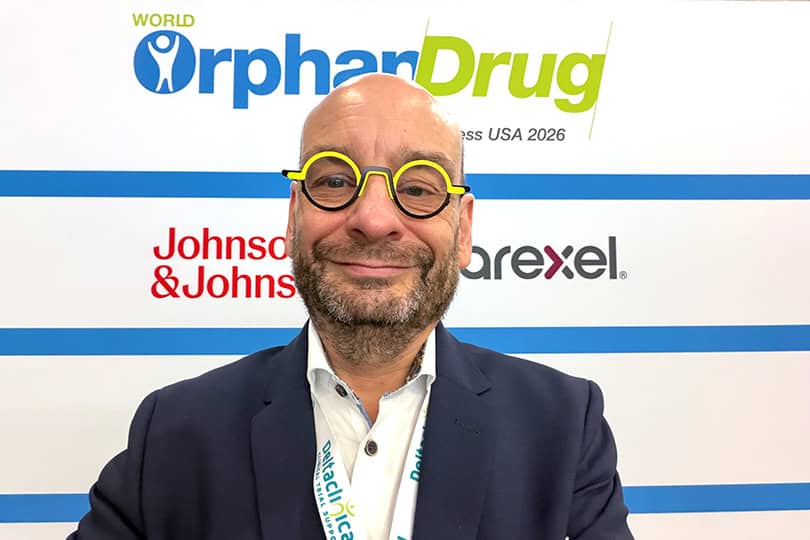
This article was written following the participation of our CEO in the World Orphan Drug Congress in Boston and reflects some of the key insights and discussions that resonated with me throughout the event.