
Clinical trial home visits
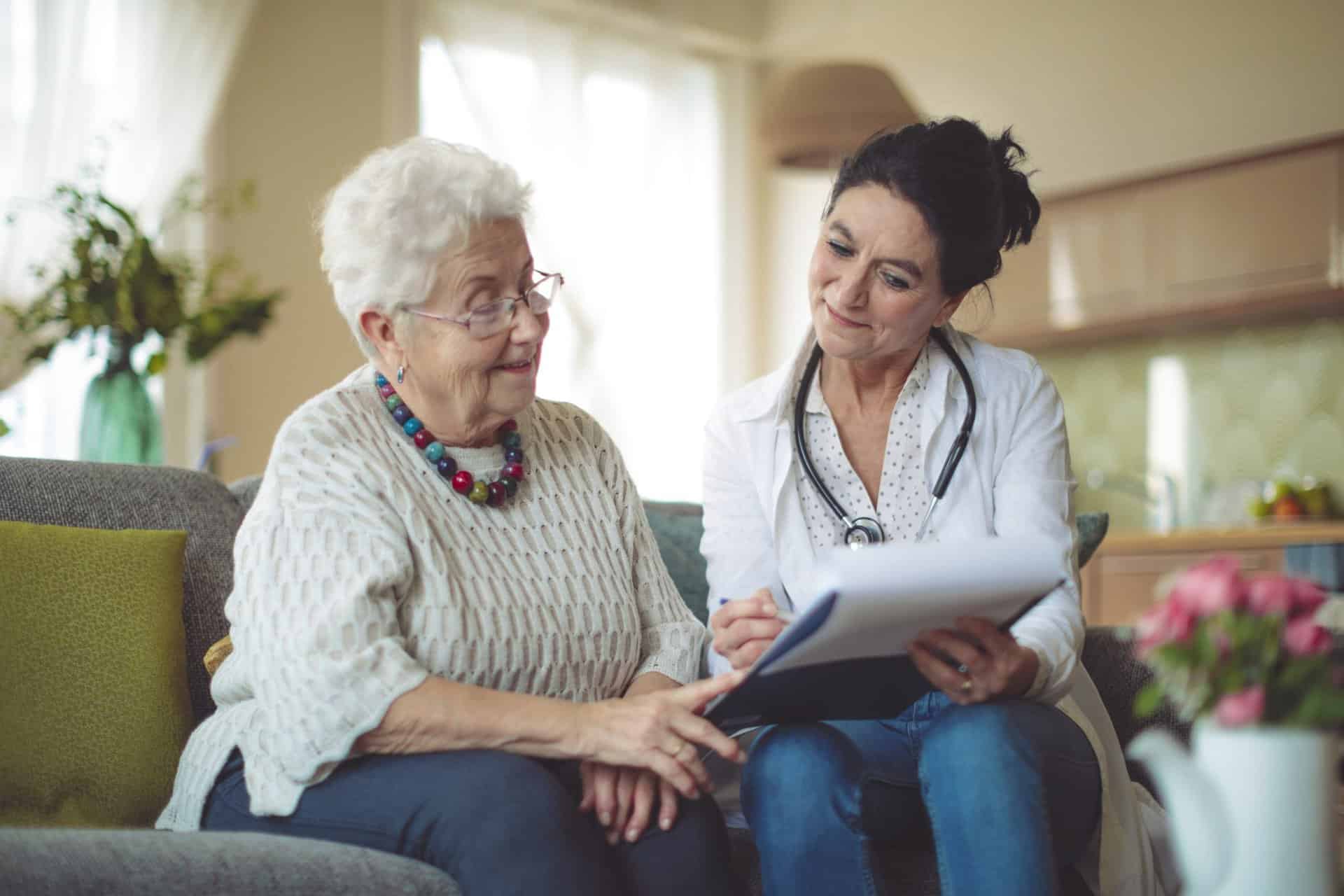
A clinical trial home visit is a study visit in which a trained study nurse performs protocol procedures at the participant's home instead of at the investigator site. It replaces or supplements a site visit and is the core building block of decentralized and hybrid clinical trials.
Bring the trial to the patient
For most participants a home visit is simply easier than a hospital visit. No travel, no parking, no day off work, no childcare to arrange. That single difference is often what decides whether someone joins a study and whether they stay in it to the end.
Deltaclinical has spent nearly twenty years building a worldwide network of study nurses and clinical study coordinators who take over study-related tasks at the patient’s home, at work, at school or wherever the participant happens to be. We coordinate the visits, train the nurses on your protocol and handle the logistics, so your site keeps oversight without absorbing the workload.
Three ways sponsors use home visits
Fully decentralized trials
Hybrid trials
Screening and complex visits stay at the investigator site; routine follow-up moves to the home. This is the model most sponsors adopt first, because it reduces burden without changing the site relationship.
Rescue and overflow
Home visits added mid-study to unblock a site that cannot recruit, to retain participants who have moved or become less mobile, or to absorb a peak in workload.
What can be done during a home visit
The list below covers what our study nurses routinely perform. Scope is always confirmed against your protocol, local regulations and the delegation log before the first visit.
- Blood sampling and PK sampling — venepuncture, cannulation and timed pharmacokinetic series
- Investigational medicinal product administration — oral dosing, subcutaneous and intramuscular injection
- Home infusions — intravenous administration with the monitoring your protocol requires
- ECG at home — 12-lead recording and transmission
- EEG@home — full 10–20 montage applied and recorded overnight in the participant’s own bed
- Spirometry and lung function — with device training for the participant where needed
- Vital signs and physical assessments — blood pressure, heart rate, temperature, weight, height
- Questionnaires, ePRO and diary support — completion, compliance checks and device troubleshooting
- Adverse event and concomitant medication follow-up — documented and escalated to the site
- Drug accountability — dispensing, return and reconciliation at the participant’s home
- Sample processing and cold chain — centrifugation, aliquoting, freezing and courier handover
- Medical device training — infusion pumps, syringe pumps, ECG and spirometry devices
Why sponsors add home visits
Easier recruitment, a wider catchment
Eligibility stops being limited by how far a participant lives from the site. For rare disease programmes with a handful of expert centres, that is often the difference between meeting enrolment and missing it.
Higher compliance and fewer drop-outs
Visit-intensive and long-running protocols wear participants down. Removing the travel makes repeat visits sustainable, which shows up directly in retention.
Less workload on the investigator site
Many sites simply cannot absorb the extra work a study brings. Our nurses and coordinators take over the routine visits while the site retains medical oversight and the delegation.
Better data from real circumstances
Assessments performed in the participant’s own environment reflect ordinary daily life rather than a hospital day, which matters for sleep, activity and quality-of-life endpoints.

Home visit or site visit?
Neither model replaces the other. The question is which visits in your schedule of assessments genuinely require the site, and which only require a qualified nurse.
| Site visit | Home visit | |
|---|---|---|
| Participant burden | Travel, parking, waiting, time off work, childcare | None beyond being at home for the appointment |
| Catchment area | Limited by travel distance to the site | Follows the nurse network, not the site postcode |
| Best suited to | Screening, randomisation, complex imaging, procedures needing site equipment | Routine follow-up, PK series, dosing, sampling, ECG, EEG, questionnaires |
| Site workload | Fully absorbed by site staff | Coordination and execution handled by Deltaclinical |
| Medical oversight | Investigator, on site | Investigator, by delegation — source data returns to the site |
| Typical use | Every visit in a traditional protocol | Selected visits in a hybrid protocol, or most visits in a decentralized one |
How we set up home visits for your study
Feasibility and country assessment
We review your protocol and site list and tell you which countries we can cover, which procedures are permitted for a nurse in each of them, and where the honest limits are.
Nurse recruitment and contracting
We source, screen and contract study nurses per country and per protocol, and collect the credentials, CVs and qualification documentation your trial master file requires.
Study-specific training
Every nurse receives ICH-GCP and study-specific training before the first visit, with training records maintained. We also provide device training for infusion pumps, ECG and spirometry equipment.
Scheduling and logistics
We schedule with the participant, arrange supplies and equipment, book couriers and manage the cold chain both ways. Rescheduling is part of the service, because life gets in the way.
Visit execution
The nurse performs the protocol procedures, completes source documentation and reports adverse events to the site through the agreed route.
Documentation and reporting
Source data returns to the investigator site, samples reach the laboratory, and you receive visit status reporting. Queries are resolved by our coordinators, not by your site staff.
Coverage and experience
Worldwide, built per protocol
Deltaclinical provides worldwide coverage for clinical trial home visits. We build the study nurse network per country and per protocol rather than working from a fixed footprint, so your site list determines the coverage instead of the other way around.
Our operational bases are in Willebroek, Belgium and at Leiden Bio Science Park in the Netherlands, and our nurse network extends across Europe and beyond, including recent programmes running in France, Germany, the Netherlands, the United Kingdom, Belgium and Slovenia.
Nurse experience ranges from phase I to phase IV, and every nurse works to ICH-GCP.
Therapeutic areas and study types
Related services
EEG@home
Full 10–20 montage applied and recorded overnight in the participant’s own bed, with the data returned to your reading centre.
Site support services
Study coordinators, research physicians, laborants and study nurses to run a full study on site or absorb peaks in workload.
Training and courses
ICH-GCP training recognised by TransCelerate, plus device training for infusion pumps, syringe pumps, ECG and spirometry equipment.
Deltaclinical by numbers
> 1500 annual home visits
76 running clinical trials
400+ study nurses
20000 hours site support
Frequently asked questions about clinical trial home visits
| Question | Answer |
|---|---|
| What is a clinical trial home visit? | A clinical trial home visit is a study visit in which a trained study nurse performs protocol procedures at the participant's home, workplace or school instead of at the investigator site. It replaces or supplements a site visit and is a core component of decentralized and hybrid clinical trials. |
| Which procedures can be performed during a home visit? | Common home visit procedures include blood sampling and PK sampling, investigational medicinal product administration, subcutaneous injections and infusions, ECG, EEG, spirometry, vital signs, physical assessments, questionnaires and ePRO support, adverse event follow-up, drug accountability, and sample processing with cold chain courier handover. |
| Do home visits improve recruitment and retention? | Home visits reduce the practical burden of participation by removing travel, time off work and childcare requirements. Sponsors use them to widen the eligible population beyond the catchment area of the investigator site and to reduce drop-out during long or visit-intensive protocols. |
| Where does Deltaclinical perform home visits? | Deltaclinical performs clinical trial home visits worldwide. The study nurse network is built per country and per protocol rather than from a fixed footprint, so coverage follows the sponsor's site list instead of limiting it. |
| Are the study nurses GCP trained? | Yes. All Deltaclinical study nurses have completed ICH-GCP training and receive study-specific training on your protocol before their first visit. Training records, delegation logs and qualification documentation are maintained for the trial master file. |
| Who remains the investigator? | The investigator site remains responsible for the participant and for medical oversight. The home visit nurse works under delegation from the principal investigator, and all source data flows back to the site. |
| Can home visits be used for rare disease and paediatric trials? | Rare disease and paediatric programmes are among the strongest use cases, because participants are geographically dispersed and often travel long distances to a small number of expert sites. Home visits reduce that travel and make repeat or long-term follow-up sustainable for families. |
| What is the difference between decentralized, hybrid and traditional trials? | A traditional trial performs all visits at the investigator site. A fully decentralized trial performs visits remotely or at the participant's location. A hybrid trial combines both, keeping complex or screening visits at the site while moving routine follow-up visits to the home. Most sponsors adopt the hybrid model first. |
| How quickly can home visits be added to a running study? | Timelines depend on the country, the procedures involved and whether a protocol amendment is required. Nurse sourcing, contracting and study-specific training are the critical path, and we give you a realistic estimate per country during the feasibility call. |
| How is data protection handled? | All processing is GDPR-compliant and supported by an external Data Protection Officer. Source documentation, transfer routes and retention follow your data management plan. |
Interested?
Send us your protocol and site list. In about thirty minutes on a feasibility call you will know which countries we can cover, which procedures a nurse may perform in each of them, and what the visit burden looks like for your participants.